
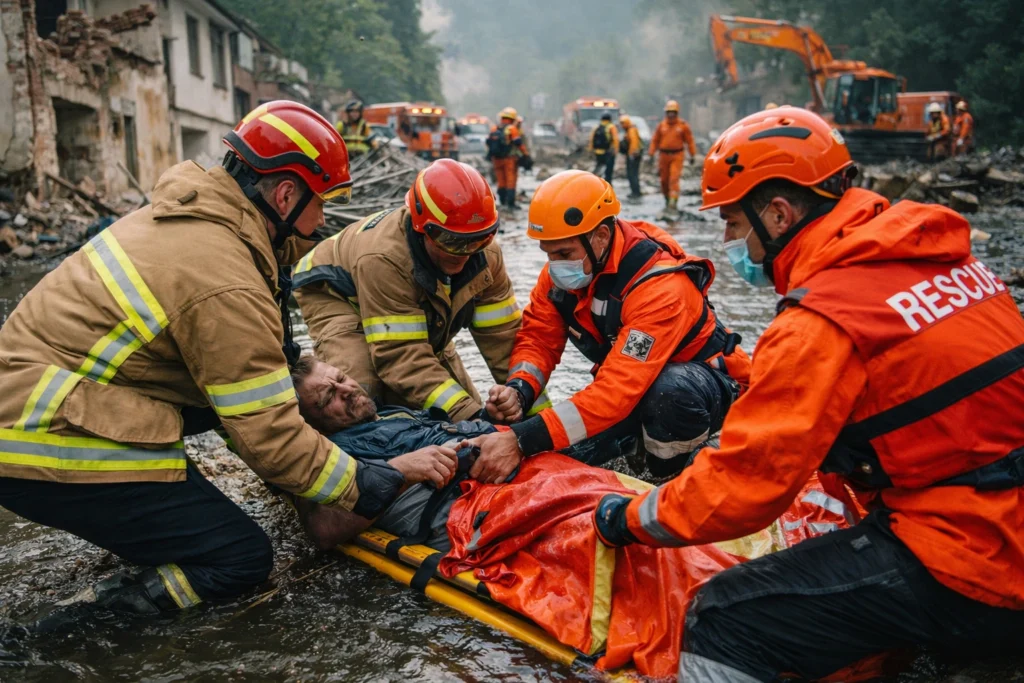
Everything changes in minutes when disaster strikes. You panic, the communication systems become unoperational, and laughably, decisions are reached instantaneously. That is the time when the disaster management crew performs their duty to save lives and minimize the devastation. Based on what I’ve seen, though, most teams are fundamentally unready to deal with real-world pressure, even when they have good plans on paper. And that is where the question comes into play: how can we empower the disaster management crew to do better when the time comes to act to save lives?
Based on my experience studying disaster response systems, the largest chasm is at the implementation, not the planning level. During an emergency, teams might experience confusion, delays, and disarray. That is what makes knowing how we can help the disaster management team, an out-of-the-ordinary scenario, a need in reality. But true empowerment gives teams the necessary training, tools, and decision-making — so they can quickly and decisively act in matters of seconds.
How Can We Empower the Disaster Management Crew? (Quick Answer)
Equipping disaster response crews with better training and equipment, responsive datapoints, reliable communication channels, and empowering them to make rapid decisions can all go a long way. Having mental support and reducing coordination insufficiencies between the agencies directly enhances the efficiency of the response.
What Does Empowering Disaster Management Crew Mean?
It also enables teams to be ready to move and activate without delay as soon as the disaster strikes, effectively empowering the disaster management crew.
This includes:
- Regular training and drills
- Access to tools and equipment
- Clear communication systems
- Defined roles and responsibilities
- Authority to take action
Simply put, it means that teams have been trained and trusted to take action when necessary.
Why Empowerment Matters More Than Planning
No doubt, planning is good, but disasters never follow a blueprint. Things change, and new issues pop up out of the blue.
I believe that a tuned and empowered team can respond better than a system that relies on ink on a page. But it is the good, solid delivery on the ground that saves lives
Real Challenges Disaster Management Crews Face on the Ground
In reality, there are multiple challenges when a responder task force responds to a disaster site.
- Lack of conversation is one of the fundamental problems. Cell networks may not work. Radio systems could not work.
- Another challenge is limited resources. Some of those teams might be short on tools, vehicles, or even medical supplies.
- Delayed decision-making is also common. Unless provided with clear direction, teams tend to delay action.
- It does not help that there are also some coordination problems between agencies. The response slows down when departments do not cooperate.
The first step to true empowerment is in recognizing these challenges.
Core Ways to Empower Disaster Management Crew
1. Advanced Training and Simulation
Training should include real-life scenarios. Today, many systems, like the Incident Command System (ICS), address this problem with structured approaches to enhance coordination.
Regular drills help teams:
- React faster
- Understand their roles
- Reduce confusion
2. Use of Modern Technology
Technology enhances response time and accuracy.
Common tools include:
- GPS tracking systems
- Geographic Information Systems (GIS)
- Real-time data dashboards
But backup systems should always be present.
3. Proper Equipment and Infrastructure
Teams must have access to:
- Rescue equipment
- Medical supplies
- Transport vehicles
4. Strong Communication Systems
Communication is essential during disasters.
Best practices include:
- Using multiple communication channels
- When radio, satellite, and mobile systems complement each other
- Ensuring systems work together
5. Decentralized Decision-Making
Field teams should have the ability to make on-the-spot decisions instead of waiting for management approval.
Now there are no more delays, and the response time is a lot better. In my experience, teams that feel empowered and are trusted to take action perform better!
Role of Technology in Modern Disaster Management
The generation performs a critical function in current disaster management.
Important tools include:
- Data-driven early-warning systems
- Drones for search and rescue
- GIS for mapping affected areas
- Mobile apps for coordination
Such tools are already in use in many advanced disaster management systems.
Psychological Strength and Mental Resilience of Disaster Teams
Disaster response is mentally demanding. Is something that teams might work under stress, and dealing with difficult situations.
Mental fatigue can affect decision-making. That’s why mental guidance is crucial.
Organizations should:
- Provide stress management training
- Offer mental health support
- Rotate teams to avoid burnout
Sound mental health helps in increasing performance.
learn about: KSözcü explained: inside Turkey’s Influential Sözcü news Platform
Community Involvement: The Role of Local Support Systems
Disaster response is deeply embedded in local communities.
Oftentimes, locals are the first responders prior to the official teams.
Authorities should focus on:
- Training volunteers
- Spreading awareness
- Building local emergency systems
When disaster strikes, community support ensures a faster and more effective response.
Funding, Resources, and Logistics in Disaster Management
It managed to channel the subject of funding, resources, and logistics in disaster management.
You cannot manage disasters without money.
An important aspect that governments and organizations might need to invest in:
- Training programs
- Equipment
- Infrastructure
Logistics is also important. Rapid deployment of resources to affected areas
Three major points: First, underfunding and poor logistics can stall response and escalate destruction.
Measuring the Effectiveness of Disaster Management Teams
If empowerment is indeed improvement, it should be measurable.
Key indicators include:
- Response time
- Rescue success rate
- Resource utilization
- Recovery time
In addition, regular evaluation improves responses to future disasters.
Real-Life Disaster Scenario: Step-by-Step Response
Now, how empowerment works, consider the example of a flood.
- Initially, alerts are sent out, and teams are activated.
- Then they send rescue teams, and communication systems are established.
- From there, they initiate evacuation and medical assistance.
These steps take place faster and with better orchestration when teams are given the power to act.
The E.M.P.O.W.E.R Framework for Disaster Management
You can frame empowerment in a very easy way, like this:
- Equipment readiness
- Mental resilience
- Predictive technology
- Operational authority
- Workforce training
- Ecosystem collaboration
- Real-time data
These pillars link every critical aspect of disaster management together.
Future Trends in Disaster Management (2026 and Beyond)
Technologies used for Disaster management are changing.
Key trends include:
- AI-based early warning systems
- Smart city disaster monitoring
- Improved climate prediction
- Automated rescue systems
Those who adjust to these trends will be most successful in the future.
Expert Insight
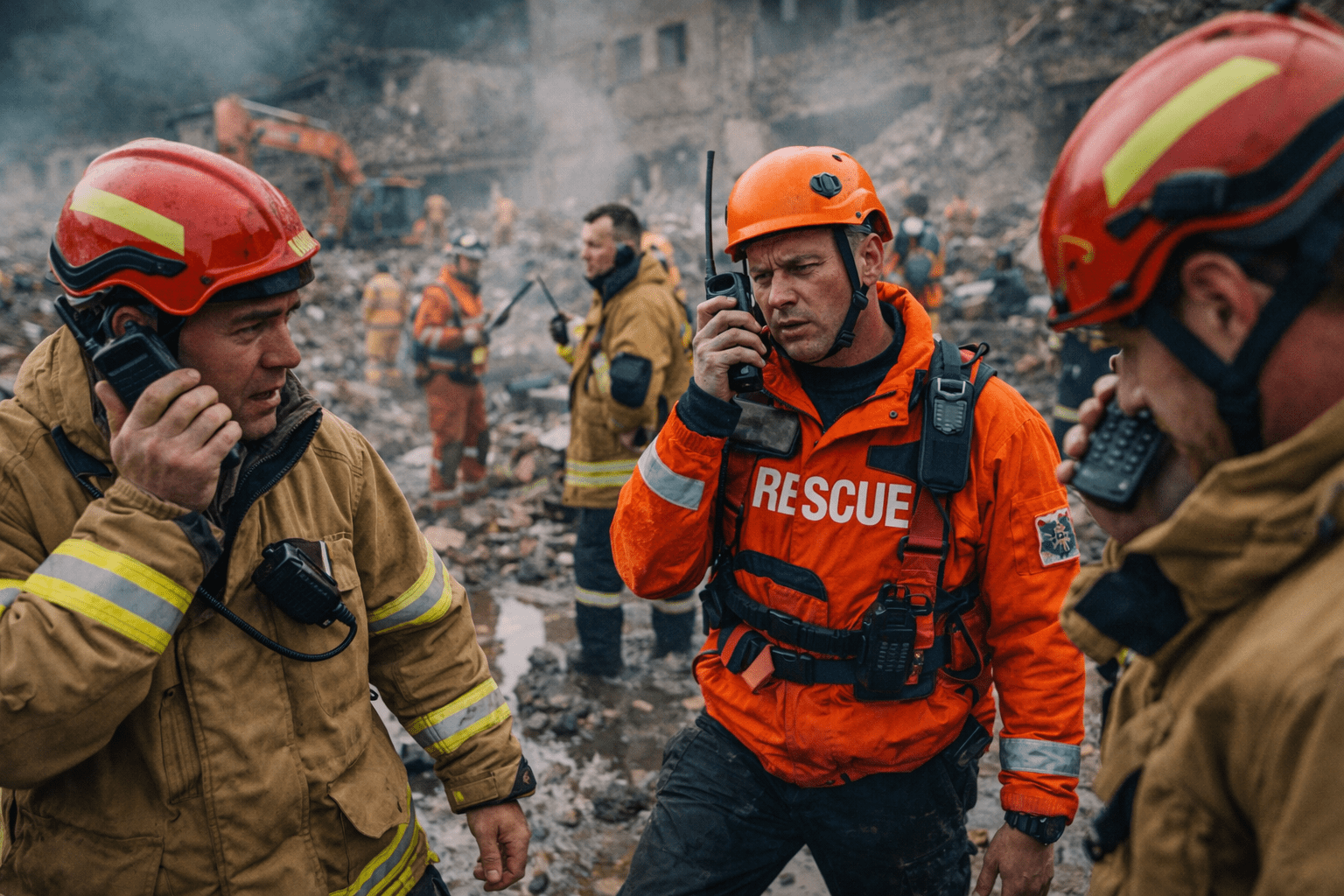
To me, one of the greatest Achilles heels in disaster management is the aspect of delayed action. In fact, some responses can still be slow even when plenty of resources are pouring in, as there is little coordination and no single authority.
Enabling teams at the ground level leads to better results. Teams respond far better when they are trained, equipped, and trusted.
Conclusion
And that too, empowering disaster management crew is not limited to betterment in systems. It is empowering those who are first to respond to crises. In my experience, the best teams are the ones that are highly trained, well-resourced, and empowered to make decisions on the ground. Now this gives a direct display on how we can possibly empower the disaster management crew, which is indirectly linked to how each system can perform on real disaster.
Intangible advances can be tracked simply by arranging, yet an obvious change should be through execution. A disaster can be handled rapidly and effectively when teams communicate openly, are well-led, and can act free of delay. We can divert this trend if, and only if, we aim to translate our surge of good intentions into tangible redirection of resources; this means we must optimize the way we equip real-life disaster response teams with the right tools to realize their goals in practice, after all, that is the point of all the emoji memories, right?
FAQs: How Can We Empower the Disaster Management Crew?
- What will be the key aim behind the empowerment of the disaster management team? The primary aim is to enhance the response speed and effectiveness of response teams so that they can act swiftly during emergencies.
Reason which makes training indispensable in disaster management?
Practice allows your teams to deal with real scenarios, reduce friction, and arrive at better decisions in high-pressure situations.
Q: How is technology aiding disaster management teams?
With technology, businesses can now gather real-time data, communicate more effectively, and direct teams towards faster responses.
So, what are the key challenges in disaster management?
Typical problems are misunderstandings/communication failures, a shortage of resources, decisions made too late, and a lack of coordination between the teams.
What role can communities play in supporting disaster management crews? Communities can play a role by getting trained, raising awareness, and being the first responder.
So how does government fit into disaster management?
The governments provide financing, policies, infrastructure, and training systems that support disaster teams.