
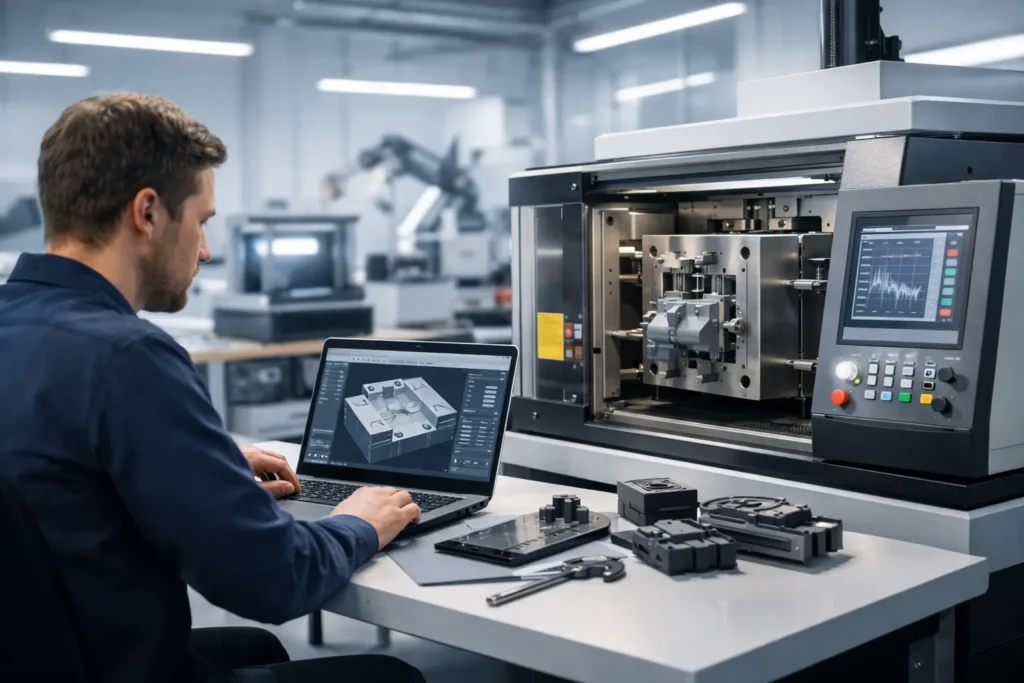
When I first came across the term repmold, I noticed something confusing. Different websites were explaining it in different ways. Some called it an advanced AI system, while others linked it with 3D printing. A few even showed it as a company name instead of a manufacturing concept. This makes it hard for beginners, engineers, and business owners to understand what it actually means.
In this article, I will explain repmold in simple and practical terms based on research and real workflow understanding. I will not just define it, but also show how it works, where it is useful, and where it is not. If you are a manufacturer, engineer, or startup founder, this guide will help you decide whether it is the right approach for your needs in 2026.
What is Repmold? (Simple and Practical Definition)
Repmold is a modern approach to creating and reusing molds to produce products faster and with better flexibility.
In simple words, it helps you:
- create molds quickly
- reuse them efficiently
- produce consistent parts
From my research, it is not a single product or machine. It is a combined concept of rapid tooling, mold replication, and digital manufacturing support.
This is important to understand before going deeper.
Why “Repmold” Feels Confusing (Beginner Clarity)
In case you are confused, you aren’t alone. i used to be confused at the start, too.
Here is why:
- Some articles describe it as AI manufacturing
- Some explain it like 3D printing
- Some show a company instead of the concept
In reality, repmold sits between:
- traditional mold making
- rapid prototyping
- and smart manufacturing systems
Once you understand this, the topic becomes much easier.
How It Works (Step-by-Step for Engineers and Designers)
Let me explain the process simply and practically.
1. Digital Design
The product is designed using CAD software.
2. Mold Creation
A mold is created based on the design. The focal point is on speed and adaptability.
3. Simulation
Some systems test the mold digitally before production.
4. Production
The mold is used to produce multiple parts.
5. Iteration
Design changes can be made quickly without starting over.
For engineers, this is a big advantage. It allows faster testing and fewer delays.
Repmold vs Traditional Molding vs 3D Printing (Decision Guide)
If you are a manufacturer or buyer, this section matters the most.
| Factor | Traditional Molding | Repmold | 3D Printing |
| Setup Time | High | Moderate to Low | Low |
| Cost | High upfront | Controlled | Low for small runs |
| Flexibility | Low | High | Very High |
| Best Use | Mass production | Prototyping + short runs | Concept models |
From my perspective:
- Choose traditional molding for large-scale production
- Choose repmold for flexibility and faster testing
- Choose 3D printing for early-stage ideas
This is where repmold becomes valuable.
Why Manufacturers Are Interested in Repmold
If you run a factory or production unit, your main concern is cost and speed.
From what I have seen, repmold helps in:
- reducing production delays
- lowering tooling cost for small batches
- improving workflow efficiency
In traditional systems, mold creation can take weeks. With repmold-style approaches, this time can be reduced significantly.
Key Features of Repmold Technology
Faster Production Cycles
You can move from design to product quickly.
High Flexibility
Design changes are easier to handle.
Better Consistency
Once optimized, results are stable.
Digital Integration
Some systems use simulation or AI tools, but this depends on the setup.
Types of Repmold Systems (For Technical Users)
Flexible Systems
Used for quick changes and softer materials.
Rigid Systems
Used for strong and durable parts.
Hybrid Systems
Combine both approaches.
For engineers, choosing the right type depends on product requirements.
Materials Used in Repmold
Common materials include:
- silicone
- polymers
- resins
- composites
Material choice depends on strength, cost, and production needs.
Real-World Applications (Practical Examples)
This is where most articles stay weak. Let’s make it real.
Automotive
Used to test parts before mass production.
Medical Devices
Used for precise and small components.
Consumer Products
Helps startups test products before investing heavily.
Electronics
Used for prototyping small components.
From my observation, it works best in testing and early production stages.
For Startups: Why Repmold Matters
If you are building a product, you probably face these problems:
- high manufacturing cost
- slow development
- risk of failure
This helps solve these by:
- reducing initial investment
- speeding up testing
- allowing quick changes
In simple words, it helps you move from idea to product faster.
Expert Insight (Based on Practical Understanding)
In many workflows I have studied, the biggest issue is delay and cost in tooling.
It becomes useful when:
- You are still testing your product
- You need flexibility
- You want to reduce risk
But I would not recommend it for full mass production. Traditional systems are still better for that.
Benefits of Repmold
- faster turnaround
- lower cost for small batches
- high flexibility
- easier design updates
These benefits are most useful in prototyping and small production runs.
Challenges and Limitations (Honest View)
To keep things realistic:
- not ideal for large-scale manufacturing
- requires technical knowledge
- Material limitations exist
- The setup still needs planning
This is important for right decision.
Who Should Use Repmold?
This is best for:
- manufacturers testing new processes
- engineers working on prototypes
- startups building physical products
- product design teams
If you fall into one of these groups, it can be useful.
How to Start Using It? (Beginner Path)
If you want to explore it:
- learn basic CAD design
- understand mold-making basics
- Try simulation tools
- start with small projects
- test and improve
Start small and grow step by step.
Learn about: Nerwey.
Is Repmold an actual technology or only a Buzzword?
This is a common question.
From my research:
- It is not a standardized industrial term
- But it represents real processes
So yes, it is real in practice, but used broadly online.
Future of Repmold in 2026 and Beyond
Looking ahead, I see growth in:
- AI-assisted design
- better simulation tools
- faster production systems
- smart manufacturing integration
It will likely become part of a larger digital manufacturing system.

Frequently Asked Questions
What is repmold in simple words?
It is a way to create and reuse molds quickly to produce products efficiently.
Is repmold better than traditional molding?
It depends. It is better for flexibility and prototyping, but not always for mass production.
Is Repmold the same as 3D printing?
No. 3D printing builds objects layer by layer, while repmold uses molds.
Who should use repmold?
Manufacturers, engineers, startups, and product designers.
Is repmold expensive?
It can reduce costs in small production, but the setup still requires investment.
Conclusion
Repmold is not just a trending keyword. It represents a shift toward faster, more flexible, and more practical manufacturing processes. From my analysis, its real strength is in helping teams move quickly from design to testing without spending too much time or money on traditional tooling. It is especially useful for prototyping, product development, and small production runs where flexibility matters the most.
At the same time, it is important to use it with the right expectations. Repmold is not a replacement for large-scale manufacturing systems. Instead, it works best as a bridge between idea and production. If you understand where it fits, it can help you reduce risk, improve speed, and make better decisions in modern manufacturing workflows.

Hi, I’m Ramiz, the founder and editor of EchoGeneral.com
A growing online platform that shares general news, trending insights, lifestyle tips, and informative articles for readers around the world.
My mission is to make knowledge simple, reliable, and accessible to everyone. Through honest reporting and white-hat SEO practices, I aim to build a trusted space where people can explore diverse topics — from technology and health to culture, productivity, and beyond.
📧 Contact: info@echogeneral.com
🌐 Visit: https://echogeneral.com