
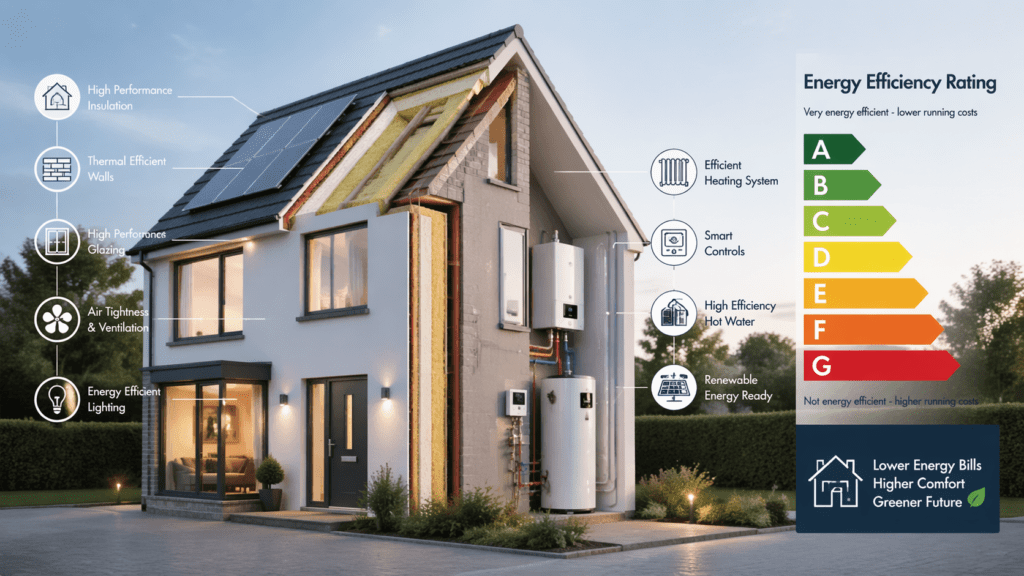
If you’re dealing with building energy ratings in the UK, you’ve probably heard about the standard assessment procedure software. Let’s get straight to the point. This software is used to calculate the energy efficiency of residential buildings and generate SAP scores that are required for EPC certificates. It takes complex building data like insulation, heating systems, and materials, and turns it into a clear energy rating.
Here’s the thing. Doing this manually is almost impossible today. I’ve worked on projects where teams tried spreadsheets before switching to proper standard assessment procedure software, and the difference was night and day. Faster results. Fewer mistakes. And most importantly, compliance with regulations from GOV.UK. If you’re building, designing, or assessing homes, this tool is not optional anymore. It’s essential.
What is the Standard Assessment Procedure (SAP) in Simple Terms?
SAP is the UK government’s method for measuring how energy-efficient a home is. It calculates things like energy use, carbon emissions, and heating costs.
The rules come from the GOV.UK and are maintained with support from BRE Group. Every new residential building must go through a SAP assessment before it gets an Energy Performance Certificate (EPC).
Now, SAP 10 is the latest version. And trust me, it’s stricter. Lower carbon targets. More accurate calculations. If your standard assessment procedure software isn’t updated to SAP 10, you’re already behind.
What Is Standard Assessment Procedure Software?
In simple words, the standard assessment procedure software is a digital tool that automates SAP calculations.
Instead of manually calculating energy performance, the software does everything:
-
Takes building inputs
-
Runs complex calculations
-
Generates SAP scores and reports
I’ve personally used different tools over the years. Some were slow. Some were confusing. The good ones? They save hours of work and reduce stress.
How Standard Assessment Procedure Software Works
Let me break it down in a way that actually makes sense.
First, you input data:
-
Floor area
-
Wall construction
-
Insulation levels
-
Heating systems
Then the software calculates:
-
Energy consumption
-
Carbon emissions
-
SAP score
Finally, it gives you:
-
EPC rating
-
Compliance reports
Sounds easy. However, here’s the truth. If your inputs are incorrect, your effects are vain. And that I’ve seen occur more instances than I can count.
Key Features to Look for in SAP Software
Not all standard assessment procedure software is equal. Some are basic. Others are powerful.
Here’s what actually matters:
-
SAP 10 compliance (non-negotiable)
-
Easy data input interface
-
Real-time calculation updates
-
Built-in error checking
-
Report generation for EPC
Some advanced tools from companies like Trimble even integrate with BIM systems. That’s a huge plus if you’re working on large projects.
SAP vs RdSAP Software: What’s the Real Difference?
This confuses a lot of people.
-
SAP is used for new builds.
-
RdSAP is used for existing buildings.
That’s it. Tools like Elmhurst RdSAP Online are designed specifically for existing homes where full data isn’t available.
From my experience, many beginners mix these up and end up using the wrong standard assessment procedure software. That leads to delays. And sometimes failed compliance.
Benefits of Using Standard Assessment Procedure Software
Let’s be real. The biggest benefit is time. I’ve worked on projects where manual calculations took days. With standard assessment procedure software, it takes hours. Sometimes minutes.
Other benefits:
-
Fewer human errors
-
Better accuracy
-
Faster approvals
-
Clear compliance with regulations
And honestly, clients trust your work more when you use professional tools.
Top Standard Assessment Procedure Software Options (2026)
There are different types of tools available today:
-
Enterprise platforms like Trimble
-
Sustainability-focused tools like SimaPro
-
Compliance-specific platforms used by assessors
Each has its place. The key is choosing based on your needs, not just price.
Common Mistakes People Make When Using SAP Software
I’ve seen this too many times. Humans expect the software program to “discern it out.” It won’t.
Here are common mistakes:
-
Entering incorrect building data
-
Ignoring thermal bridging
-
Using default values blindly
-
Not updating to SAP 10
One small mistake can completely change the SAP score. And that can delay your entire project.
How SAP Software Impacts Building Design Decisions
This is something competitors rarely talk about. Good standard assessment procedure software doesn’t just calculate. It helps you design better buildings.
For example:
-
You can test insulation options
-
Compare heating systems
-
Adjust glazing to improve efficiency
I’ve worked with architects who use SAP tools early in the design phase. It saves money later. Big time.
2026 Update: AI and Automation in the Preferred Assessment Process Software Program
Things are changing fast. Modern standard assessment procedure software is starting to use AI.
What does that mean?
-
Automatic suggestions for energy improvements
-
Predictive SAP scoring
-
Faster compliance checks
This wasn’t possible a few years ago. Now, it’s becoming standard. And honestly, it’s making life much easier for assessors and engineers.
Pro-Tip: My Personal Take
From my experience, the biggest mistake I see is over-reliance on default values in standard assessment procedure software. It feels convenient, but it kills accuracy. I always double-check insulation, heating systems, and thermal bridging inputs manually. That extra 10 minutes can save hours of rework later. Trust me it’s worth it.
How to Choose the Right SAP Software for Your Needs
Not everyone needs the same tool.
-
If you’re a freelancer: Go for simple, affordable software.
-
If you’re a construction company: Choose integrated platforms.
-
If you’re a consultant: Look for advanced reporting features.
The best standard assessment procedure software is the one that fits your workflow.
Is the Standard Assessment Procedure Software Mandatory in the UK?
Yes. For new residential buildings, it’s required. Without SAP calculations, you can’t get an EPC. And without an EPC, your building isn’t compliant.
Organizations like BRE Group play a key role in maintaining these standards. So skipping the proper standard assessment procedure software is not an option.
Frequently Asked Questions
What is the trendy assessment process software used for?
It’s used to calculate energy efficiency and generate SAP scores for buildings in the UK.
Is SAP software required for EPC certificates?
Yes. SAP calculations are required to produce EPC certificates for new homes.
What is the difference between SAP 10 and RdSAP?
SAP 10 is for new builds. RdSAP is for existing buildings with limited data.
Can beginners use SAP software easily?
Yes, but there’s a learning curve. Good software makes it easier with guided inputs.
How accurate is SAP software?
Very accurate if the input data is correct. Wrong inputs lead to wrong results.
Conclusion
At the end of the day, standard assessment procedure software is not just a tool it’s the backbone of energy compliance in modern construction. Whether you’re an assessor, builder, or consultant, you can’t avoid it. And honestly, you shouldn’t want to.
From my experience, the right standard assessment procedure software saves time, reduces stress, and improves project outcomes. But only if you use it correctly. Focus on accurate inputs, stay updated with SAP 10, and choose software that fits your workflow. Do that, and you’ll stay ahead not just compliant, but efficient.

Hi, I’m Ramiz, the founder and editor of EchoGeneral.com
A growing online platform that shares general news, trending insights, lifestyle tips, and informative articles for readers around the world.
My mission is to make knowledge simple, reliable, and accessible to everyone. Through honest reporting and white-hat SEO practices, I aim to build a trusted space where people can explore diverse topics — from technology and health to culture, productivity, and beyond.
📧 Contact: info@echogeneral.com
🌐 Visit: https://echogeneral.com