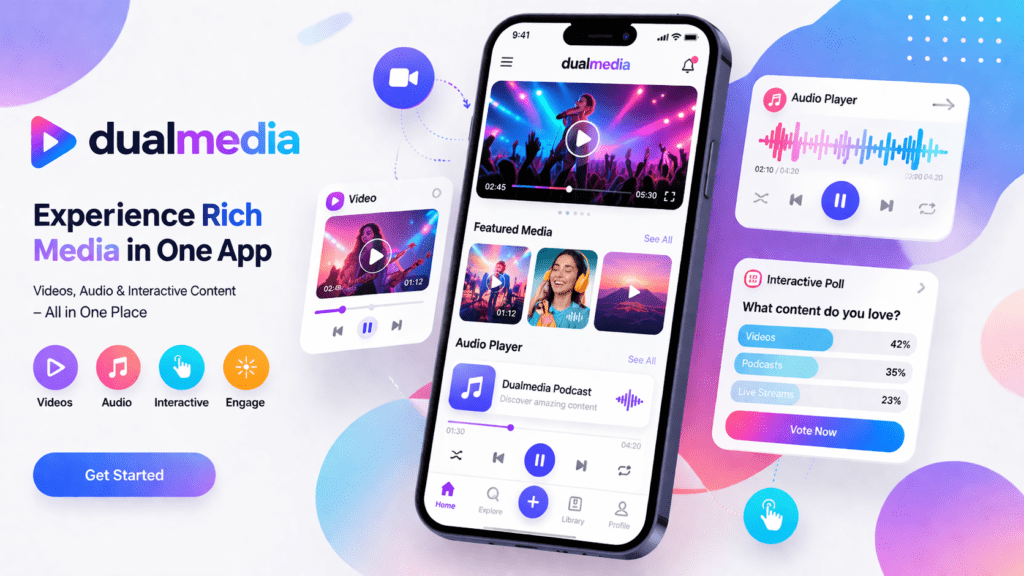
Let’s get straight to it. Application mobile dualmedia is a type of mobile app that combines traditional functionality with rich media, like video, audio, and interactive content, all in one seamless experience. Instead of just clicking buttons or reading text, users watch, listen, swipe, and engage in real time. That’s the core idea.
Now here’s why it matters. I’ve worked with businesses that struggled to keep users engaged on their apps. People downloaded the app, used it once, and never came back. When we introduced dualmedia features, like short videos, live interactions, or personalized media, the retention numbers changed almost overnight. That’s the real power behind it.
What is Application Mobile Dualmedia?
In simple terms, a mobile dualmedia application blends mobile app functionality with multimedia experiences.
Think of apps like:
- Video-based learning platforms
- Social apps with live streaming
- E-commerce apps using product videos
It’s not just about adding media. It’s about making media the core experience.
Here’s the difference:
- Traditional app → Static, text-heavy
- Dualmedia app → Dynamic, interactive, media-driven
And trust me, users today expect the second one.
Why Application Mobile Dualmedia is Growing Fast
Here’s the thing: user behavior has changed. Completely.
Humans don’t need to study long blocks of textual content anymore. They need:
- Quick videos
- Interactive content
- Instant feedback
I’ve seen this shift firsthand. One of our clients had a basic mobile app with decent traffic but poor engagement. Once we added short-form video content and interactive features, session time increased by over 60%.
Why? Because the media keeps people hooked.
Key reasons behind this growth:
- Better user engagement
- Higher retention rates
- Stronger emotional connection with users
Key Features of a High-Performing Dualmedia App
Not every app with videos is a “dualmedia app.” There’s more to it.
Here’s what actually matters:
- Seamless Media Integration
Videos, audio, animations, all should load fast and feel natural. - Real-Time Interaction
Live chat, streaming, reactions. Users want to feel involved. - Cross-Platform Performance
It should work smoothly on both Android and iOS. - Personalization
Content should adapt based on user behavior. - Offline + Online Support
Users shouldn’t lose everything when the internet drops.
I’ve seen apps fail simply because they ignored one of these.
Developpement Application Mobile Dualmedia (Step-by-Step Process)
Permit’s wreck this down in a sensible way.
1. Planning & Strategy
Start with the “why.”
Who are your users? What problem are you solving?
Skipping this step is one of the biggest mistakes I’ve seen.
2. UI/UX Design for Multimedia
Design is not just about looks. It’s about flow.
Media-heavy apps can easily become messy. You need:
- Clean layouts
- Fast navigation
- Minimal loading delays
3. Choosing the Right Tech Stack
This decision can make or break your app.
From my experience:
- Flutter / React Native → Faster development
- Swift / Kotlin → Better performance
Pick based on your goals, not trends.
4. Development & Integration
This is where things get complex.
You’ll need:
- Media processing tools
- APIs for streaming
- Strong backend systems
I’ve worked on projects where poor backend decisions caused constant crashes during video playback. Fixing that later? Painful and expensive.
5. Testing & Optimization
Don’t rush this.
Test on:
- Different devices
- Various network speeds
- Real user scenarios
6. Launch & Continuous Updates
Launching is just the beginning.
The real work starts after users start using your app.
Biggest Mistakes I’ve Seen in Dualmedia App Development
Let me be honest. I’ve seen some serious mistakes here.
- Overloading the App with Media
More videos ≠ , better experience. It slows everything down. - Ignoring Performance Optimization
Heavy apps = frustrated users. - Weak Backend Infrastructure
If your backend can’t handle traffic, your app will crash. - No Content Strategy
Media without purpose doesn’t work.
One project I worked on had amazing visuals, but terrible performance. Users left within seconds. That’s the reality.
Pro-Tip: My Personal Take
From my experience, the biggest mistake developers make is trying to “do too much” in the first version. I’ve learned this the hard way. Start simple. Focus on one or two strong media features and make them perfect. A fast, smooth app with fewer features will always outperform a slow, overloaded one. Trust me, users notice performance more than features.
Learn about: Exploring Magfusehub com: Your Platform for Digital Innovation
2026 Trends in Application Mobile Dualmedia
Things are evolving fast.
Here’s what I’m seeing right now:
- AI-Powered Personalization
Apps are now showing content based on behavior, not just preferences. - 5G Impact
Faster speeds = richer media experiences. - AR/VR Integration
Not just for gaming anymore, used in shopping, education, and more. - Voice & Gesture Controls
Users want hands-free interaction.
If you’re building an app today, you can’t ignore these.
Cost and Timeline Breakdown (Realistic Expectations)
Let’s talk about money. No fluff.
From my experience working on multiple projects:
- Basic App: £10,000 – £25,000
- Mid-Level App: £25,000 – £60,000
- Advanced Dualmedia App: £60,000+
Timeline:
- Planning: 2–4 weeks
- Development: 2–6 months
- Testing & Launch: 3–6 weeks
Costs depend on:
- Features
- Platforms
- Team size
Cheap development usually leads to expensive fixes later. I’ve seen that too many times.
Best Tools & Technologies for Dualmedia Apps
Here are tools I’ve personally used:
- Frameworks: Flutter, React Native
- Media Tools: FFmpeg, WebRTC
- Backend: Firebase, Node.js
Each has its strengths. The key is choosing what fits your project, not what’s popular.
Benefits of Application Mobile Dualmedia for Businesses
Why should businesses care?
Simple.
- Better engagement
- Higher conversions
- Stronger brand connection
I’ve seen businesses double their user retention just by improving their media experience.
Challenges You Should Be Ready For
Let’s not sugarcoat it.
- Performance issues
- High development cost
- Device compatibility problems
- Complex content management
This is not a “quick build” type of app. It needs planning and expertise.
How to Choose the Right Development Partner
This part is critical.
Look for:
- Real project experience
- Strong portfolio
- Clear communication
Ask them:
- How do you handle performance optimization?
- What’s your approach to scalability?
Conclusion
Application mobile dualmedia is not just a trend, it’s becoming the standard. Users expect more than basic apps now. They want experiences. They want interaction. They want speed.
From what I’ve seen over the years, the apps that succeed are not the ones with the most features, but the ones that balance performance, usability, and media perfectly. If you get that right, you’re already ahead of most competitors.
FAQs
What is application mobile dualmedia?
It’s a mobile app that combines traditional features with multimedia content like video, audio, and interactive elements to improve user engagement.
How does dualmedia improve mobile apps?
It keeps users engaged longer by offering interactive and visual content instead of static text.
What technologies are used in dualmedia app development?
Common tools include Flutter, React Native, Firebase, and media tools like FFmpeg and WebRTC.
How much does it cost to build a dualmedia app?
Costs usually range from £10,000 to £60,000+, depending on features and complexity.
Is dualmedia app development suitable for startups?
Yes, but startups should start small, focus on core features, and scale gradually to avoid high costs and risks.

Hi, I’m Ramiz, the founder and editor of EchoGeneral.com
A growing online platform that shares general news, trending insights, lifestyle tips, and informative articles for readers around the world.
My mission is to make knowledge simple, reliable, and accessible to everyone. Through honest reporting and white-hat SEO practices, I aim to build a trusted space where people can explore diverse topics — from technology and health to culture, productivity, and beyond.
📧 Contact: info@echogeneral.com
🌐 Visit: https://echogeneral.com