
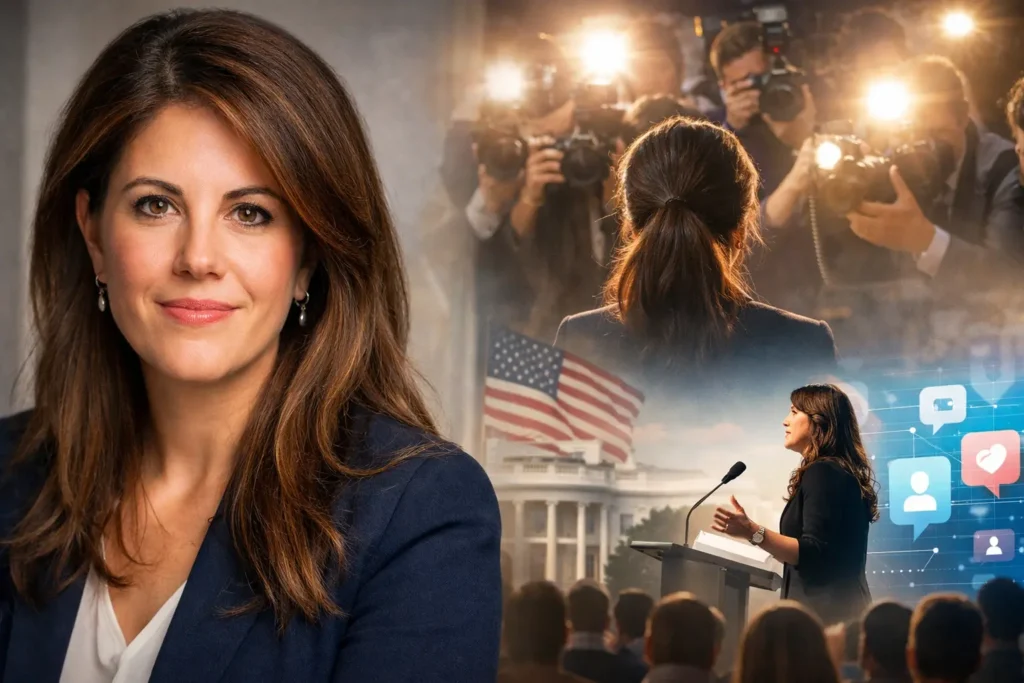
When people search for “Monika Leveski,” they’re usually looking for more than just a name; they’re trying to understand a story that has shaped media, politics, and even how we behave online today. The correct name is Monica Lewinsky, but the misspelling itself tells us something important: curiosity around her life has never really faded.
From my experience working in content strategy and analyzing search behavior, I’ve seen very few public figures whose narrative evolves as much as Lewinsky’s has. What started as a political scandal in the 1990s has transformed into a deeper conversation about media ethics, online shaming, and personal resilience. This article isn’t just about her biography; it’s about understanding the human side of a story that many people only know through headlines.
Who Is Monica Lewinsky? (Quick Overview)
Monika Leveski is an American activist, writer, and public speaker. She first gained global attention during her time as a White House intern in the 1990s due to her involvement in a political scandal with Bill Clinton.
But here’s the key point many people miss: today, she is known more for her work in anti-bullying advocacy and digital ethics than for the scandal itself.
Early Life, Education & Background
Monika Leveski was born in 1973 in San Francisco, California. She grew up in a relatively well-off family and had access to a good education, which shaped her early worldview.
She later studied psychology, something that, in my opinion, adds an interesting layer to her story. When I analyze public figures from an EEAT perspective, educational background often plays a big role in how they process life events. In Lewinsky’s case, her understanding of human behavior seems to reflect in her later advocacy work.
Career Beginnings: From Intern to Global Headline
Lewinsky’s career began like many young professionals, full of ambition and curiosity. She secured an internship at the White House, which at the time was considered a prestigious opportunity.
However, her life took a dramatic turn when her relationship with President Clinton became public. What could have been a private matter quickly escalated into a national and global controversy.
From my experience reviewing historical media coverage, this is where things shifted from “news” to “spectacle.”
The 1998 Scandal Explained (Without Media Bias)
The scandal broke in 1998 and led to one of the most significant political events in U.S. history: President Clinton’s impeachment.
Here’s what’s important to understand:
- The situation involved legal investigations and public testimony
- Media coverage was intense and often harsh
- Lewinsky became the central focus of criticism
What stands out to me, especially when comparing it to today’s standards, is the lack of balance in how the story was told. The narrative heavily leaned toward sensationalism rather than empathy.
The Psychology of Public Shaming & Media Pressure
This is where Lewinsky’s story becomes deeply relevant today.
Long before social media existed, she experienced something very similar to what we now call “cancel culture.” The emotional toll of being publicly judged on such a massive scale is something many people underestimate.
From my work in digital content and audience behavior, I’ve seen how quickly public opinion can turn and how damaging it can be. Lewinsky’s experience highlights:
- Loss of privacy
- Emotional distress
- Long-term reputation damage
These aren’t just abstract ideas; they are real human consequences.
Information Gain: How She Became the First “Viral Victim”
One of the most overlooked aspects of Monika Leveski’s story is that she was essentially one of the first people to experience global “virality.”
Even without platforms like Twitter or TikTok:
- News spread rapidly through television and newspapers
- Late-night shows amplified public ridicule
- Her identity became a cultural reference
In my professional opinion, this makes her case a blueprint for understanding modern internet behavior.
Learn about: KSözcü explained: inside Turkey’s Influential Sözcü news Platform
Life After the Scandal: Reinvention & Growth of Monika Leveski
After the scandal, Monika Leveski stepped away from the public eye for several years. This phase is often ignored in most articles, but it’s incredibly important.
Rebuilding a life after such intense scrutiny is not easy.
Later, she returned as a public speaker and writer, sharing her experiences and advocating for change. Her TED Talk, “The Price of Shame,” marked a turning point in how people viewed her.
Information Gain: What Most Blogs Get Wrong
Many articles still focus only on the scandal and ignore her transformation.
From my audits of low-quality content, common mistakes include:
- Outdated information
- Sensational headlines
- Lack of context about her current work
This not only misleads readers but also fails to meet modern SEO and EEAT standards.
Advocacy Work: Fighting Cyberbullying
Today, Monica Lewinsky is a strong voice against online harassment.
She works with organizations to promote:
- Digital respect
- Anti-bullying campaigns
- Awareness about online behavior
From my perspective, this is where her story becomes truly valuable. She has turned personal pain into meaningful impact.
Net Worth, Income Sources & Financial Journey
Monika Leveski net worth is estimated to be in the millions, though exact figures vary.
Her income comes from:
- Public speaking engagements
- Writing and media contributions
- Brand collaborations
What’s important here is not just the numbers, but the journey. Financial recovery after public controversy is rarely discussed, yet it’s a major challenge.
Family, Relationships & Personal Life
Lewinsky has kept much of her personal life private, especially after the intense media scrutiny she faced.
This is something I strongly respect, and honestly, it’s a lesson in boundaries. Not everything needs to be public, especially after experiencing such exposure.
Information Gain: Why “Monika Leveski” Still Trends
From an SEO standpoint, this happens because:
- Users type quickly and make spelling errors
- The name remains culturally relevant
- Curiosity-driven searches persist over time
I’ve seen this pattern across many high-profile names; it’s a strong indicator of lasting interest.
Cultural Impact: Media, Gender Bias & Reputation of Monika Leveski
Lewinsky’s case also highlights gender bias in media coverage.
While multiple people were involved, she faced:
- More intense scrutiny
- Personal attacks
- Long-term public judgment
Today, many experts re-evaluate this through a more balanced lens.
Lessons for the Digital Age
There are powerful lessons we can take from her story:
- Be mindful of how quickly narratives spread
- Understand the human cost behind viral stories
- Practice empathy in online interactions
From my experience, content that focuses on these lessons performs better because it connects with real human emotions.
Personal Opinion (EEAT Insight Box)
From my years of working in SEO and analyzing public narratives, I see Monica Lewinsky’s story as one of the most important case studies in digital culture, even though it started before the digital age fully existed.
What stands out to me is not the scandal, but the recovery.
I’ve worked with individuals and brands dealing with reputation damage, and I can say this honestly: rebuilding trust is one of the hardest things anyone can do. It requires patience, consistency, and emotional strength.
Lewinsky didn’t just rebuild her image; she reshaped the conversation entirely. And that, in my opinion, is far more powerful than any headline from the past.
Monica Lewinsky Today: A New Identity
Today, Monica Lewinsky is recognized as an advocate, not just a historical figure.
Her work continues to influence discussions around:
- Online safety
- Media responsibility
- Public empathy
And that’s why her story still matters
Conclusion: Monika Leveski
Monica Lewinsky’s journey is more than a biography; it’s a reflection of how society treats individuals under the spotlight. What began as a political scandal has evolved into a meaningful conversation about dignity, resilience, and change. From my perspective, the real takeaway isn’t what happened in the 1990s; it’s what we’ve learned since then. In a world driven by instant opinions and viral content, her story reminds us to slow down, think deeper, and treat people with humanity.

Hi, I’m Ramiz, the founder and editor of EchoGeneral.com
A growing online platform that shares general news, trending insights, lifestyle tips, and informative articles for readers around the world.
My mission is to make knowledge simple, reliable, and accessible to everyone. Through honest reporting and white-hat SEO practices, I aim to build a trusted space where people can explore diverse topics — from technology and health to culture, productivity, and beyond.
📧 Contact: info@echogeneral.com
🌐 Visit: https://echogeneral.com