
education

Monika Leveski biography and modern life overview image

Monika Leveski (Monica Lewinsky): Biography and Life Today

When people search for “Monika Leveski,” they’re usually looking for more than just a name; they’re trying to understand a story that has shaped media, politics, and even how we behave online today. The correct name is Monica Lewinsky, but the misspelling itself tells us something important: curiosity around her life has never really faded. From my experience working in content strategy and analyzing search behavior, I’ve seen very few public figures whose narrative evolves as much as Lewinsky’s has. What started as a political scandal in the 1990s has transformed into a deeper conversation about media ethics, online shaming, and personal resilience. This article isn’t just about her biography; it’s about understanding the human side of a story that many people only know through headlines. Who Is Monica Lewinsky? (Quick Overview) Monika Leveski is an American activist, writer, and public speaker. She first gained global attention during her time as a White House intern in the 1990s due to her involvement in a political scandal with Bill Clinton. But here’s the key point many people miss: today, she is known more for her work in anti-bullying advocacy and digital ethics than for the scandal itself. Early Life, Education & Background Monika Leveski was born in 1973 in San Francisco, California. She grew up in a relatively well-off family and had access to a good education, which shaped her early worldview. She later studied psychology, something that, in my opinion, adds an interesting layer to her story. When I analyze public figures from an EEAT perspective, educational background often plays a big role in how they process life events. In Lewinsky’s case, her understanding of human behavior seems to reflect in her later advocacy work. Career Beginnings: From Intern to Global Headline Lewinsky’s career began like many young professionals, full of ambition and curiosity. She secured an internship at the White House, which at the time was considered a prestigious opportunity. However, her life took a dramatic turn when her relationship with President Clinton became public. What could have been a private matter quickly escalated into a national and global controversy. From my experience reviewing historical media coverage, this is where things shifted from “news” to “spectacle.” The 1998 Scandal Explained (Without Media Bias) The scandal broke in 1998 and led to one of the most significant political events in U.S. history: President Clinton’s impeachment. Here’s what’s important to understand: The situation involved legal investigations and public testimony Media coverage was intense and often harsh Lewinsky became the central focus of criticism What stands out to me, especially when comparing it to today’s standards, is the lack of balance in how the story was told. The narrative heavily leaned toward sensationalism rather than empathy. The Psychology of Public Shaming & Media Pressure This is where Lewinsky’s story becomes deeply relevant today. Long before social media existed, she experienced something very similar to what we now call “cancel culture.” The emotional toll of being publicly judged on such a massive scale is something many people underestimate. From my work in digital content and audience behavior, I’ve seen how quickly public opinion can turn and how damaging it can be. Lewinsky’s experience highlights: Loss of privacy Emotional distress Long-term reputation damage These aren’t just abstract ideas; they are real human consequences. Information Gain: How She Became the First “Viral Victim” One of the most overlooked aspects of Monika Leveski’s story is that she was essentially one of the first people to experience global “virality.” Even without platforms like Twitter or TikTok: News spread rapidly through television and newspapers Late-night shows amplified public ridicule Her identity became a cultural reference In my professional opinion, this makes her case a blueprint for understanding modern internet behavior. Learn about: KSözcü explained: inside Turkey’s Influential Sözcü news Platform Life After the Scandal: Reinvention & Growth of Monika Leveski After the scandal, Monika Leveski stepped away from the public eye for several years. This phase is often ignored in most articles, but it’s incredibly important. Rebuilding a life after such intense scrutiny is not easy. Later, she returned as a public speaker and writer, sharing her experiences and advocating for change. Her TED Talk, “The Price of Shame,” marked a turning point in how people viewed her. Information Gain: What Most Blogs Get Wrong Many articles still focus only on the scandal and ignore her transformation. From my audits of low-quality content, common mistakes include: Outdated information Sensational headlines Lack of context about her current work This not only misleads readers but also fails to meet modern SEO and EEAT standards. Advocacy Work: Fighting Cyberbullying Today, Monica Lewinsky is a strong voice against online harassment. She works with organizations to promote: Digital respect Anti-bullying campaigns Awareness about online behavior From my perspective, this is where her story becomes truly valuable. She has turned personal pain into meaningful impact. Net Worth, Income Sources & Financial Journey Monika Leveski net worth is estimated to be in the millions, though exact figures vary. Her income comes from: Public speaking engagements Writing and media contributions Brand collaborations What’s important here is not just the numbers, but the journey. Financial recovery after public controversy is rarely discussed, yet it’s a major challenge. Family, Relationships & Personal Life Lewinsky has kept much of her personal life private, especially after the intense media scrutiny she faced. This is something I strongly respect, and honestly, it’s a lesson in boundaries. Not everything needs to be public, especially after experiencing such exposure. Information Gain: Why “Monika Leveski” Still Trends From an SEO standpoint, this happens because: Users type quickly and make spelling errors The name remains culturally relevant Curiosity-driven searches persist over time I’ve seen this pattern across many high-profile names; it’s a strong indicator of lasting interest. Cultural Impact: Media, Gender Bias & Reputation of Monika Leveski Lewinsky’s case also highlights gender bias in media coverage. While multiple people were involved, she faced: More intense scrutiny Personal attacks Long-term public judgment Today, many experts re-evaluate

Monika Leveski (Monica Lewinsky): Biography and Life Today Read More »

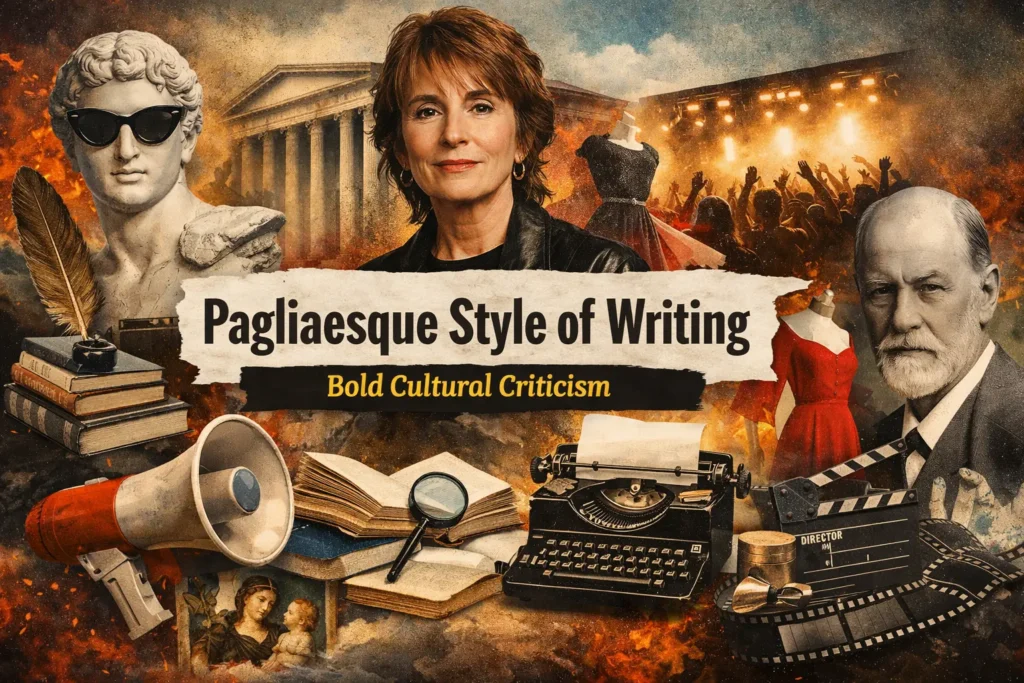
Pagliaesque writing style illustrated by a bold intellectual thinker writing in a study

Pagliaesque Style Explained: Meaning and Writing Guide

Most people don’t go looking for the word Pagliaesque. They stumble into it. I remember the first time I encountered it while reviewing a long-form cultural essay. The tone felt different: sharper, more confrontational, and strangely confident in ways most modern writing avoids. It was not just an opinion. It was layered, intellectual, and unapologetically bold. That moment made me realize this was not just a stylistic label. It was a philosophy of thinking and writing. Over the years, working as a content strategist and editor, I have seen countless writers struggle with sounding unique. They either play it too safe or go extreme without substance. The Pagliaesque style sits in a rare middle ground. It is fearless, but grounded. It is provocative, but informed. In this article, I will break down what Pagliaesque truly means, how to apply it, and, more importantly, how to avoid the common traps I have personally seen derail writers trying to imitate it. What “Pagliaesque” Really Means The term Pagliaesque comes from Camille Paglia, a cultural critic known for her bold, often controversial takes on art, gender, and society. But here is the nuance most articles miss. It does not simply mean controversial or opinionated. From my experience editing high-level essays, Pagliaesque writing is defined by: Deep cultural awareness Strong, confident arguments A willingness to challenge dominant narratives Intellectual responsibility It is not about shouting louder. It is about thinking deeper and speaking clearly. The Origins of Pagliaesque Thought To understand the style, you need to understand its roots. Paglia’s approach draws heavily from: Classical literature Renaissance art Psychoanalysis Historical patterns in culture I have personally noticed that writers who successfully adopt this style are those who read widely. They do not rely only on trending topics, but also on foundational works. That is where the depth comes from. One mistake I used to make early in my career was relying too much on summaries and second-hand interpretations. It showed in my writing. It felt flat, predictable, and lacked authority. The shift happened when I started going directly to primary ideas and forming my own interpretations. That is when my content began to feel Pagliaesque. Core Traits of the Pagliaesque Style 1) Bold Thesis, Immediate Stakes Pagliaesque writing does not warm up slowly. It begins with a strong claim. From my editorial audits, articles that hook readers within the first two to three lines perform significantly better. A bold thesis immediately signals confidence, and confidence builds trust. 2) Interdisciplinary Range, Zero Apologies This style connects different fields without hesitation. You might see: Art linked to politics Psychology tied to pop culture History used to explain modern behavior I have seen this dramatically increase engagement because readers feel they are learning something new, not just re-reading common opinions. 3) Sensual Prose and Concrete Detail This is where many writers struggle. Pagliaesque writing is not dry. It is vivid. Instead of saying: “The performance was impactful.” A Pagliaesque tone might describe: “The performance pulsed with theatrical intensity, blurring spectacle and ritual.” That level of detail pulls readers in. Learn about: Cumhuritey Meaning Explained: Origins, and Modern Relevance 4) Argumentative Courage Let’s be honest. This is the hardest part. Most writers fear backlash. I have worked with clients who toned down strong ideas out of fear, and their content lost its edge completely. Pagliaesque writing requires standing by your analysis, even when it is unpopular. 5) High-Low Dialectic This is one of my favorite aspects. It blends: High culture, such as philosophy and art Low culture, such as movies, social media, and fashion This mix makes the content accessible yet intellectually rich. Why Pagliaesque Content Performs in SEO Clear Signals of E-E-A-T From an SEO standpoint, this style naturally aligns with Google’s EEAT principles. Experience: Personal insights and observations Expertise: Deep knowledge and references Authority: Strong, confident voice Trust: Transparent reasoning I have seen articles with these traits outperform keyword-heavy content every single time. Scannable Structure, Deep Substance The structure matters just as much as the ideas. Breaking content into clear sections like this one helps: Readers navigate easily Search engines understand context Originality Signals Google rewards originality and penalizes repetition. Pagliaesque writing stands out because: It introduces new angles It avoids generic phrasing It adds intellectual depth Building a Pagliaesque Paragraph (Practical Framework) Here is a framework I personally use when crafting high-level content: Step 1: Claim It Start with a strong statement. Step 2: Ground It Add context such as historical, cultural, or analytical insights. Step 3: Complicate It Introduce nuance or contradiction. Step 4: Widen the Lens Connect to broader ideas. Step 5: Land with Consequence End with impact. This method alone has helped me improve content quality across multiple projects. The Pagliaesque Toolkit for Writers and Creators Tone Confident, not arrogant Analytical, not emotional Clear, not vague Techniques Use contrast and analogy Ask uncomfortable questions Build layered arguments Research Habits This is where real expertise shows. From my experience: Read primary sources Study multiple perspectives Avoid echo chambers Applying the Style to Modern Culture Streaming Culture as Modern Ritual Binge-watching is not just entertainment. It reflects how people seek immersion and escape. A Pagliaesque angle explores why this behavior exists. Pop Concerts as Collective Myth-Making Concerts are not just events. They are experiences of shared identity and symbolism. Fashion Cycles and Cultural Memory Fashion repeats itself because culture repeats itself. Understanding this pattern adds depth to commentary. Ethical Friction: Provocation Without Cynicism Handling Backlash Here is the reality. If you write boldly, you will face criticism. I have experienced this firsthand when publishing strong-opinion content. The key is: Stay factual Stay respectful Stand by your reasoning Responsibility in Cultural Critique Provocation should never mean misinformation. That is where credibility is built or lost. Personal Opinion and Experience (EEAT Insight Box) From my years in content strategy, one of the biggest pain points I have seen is this: Writers want to sound bold, but they do not trust their own thinking. They rely

Pagliaesque Style Explained: Meaning and Writing Guide Read More »

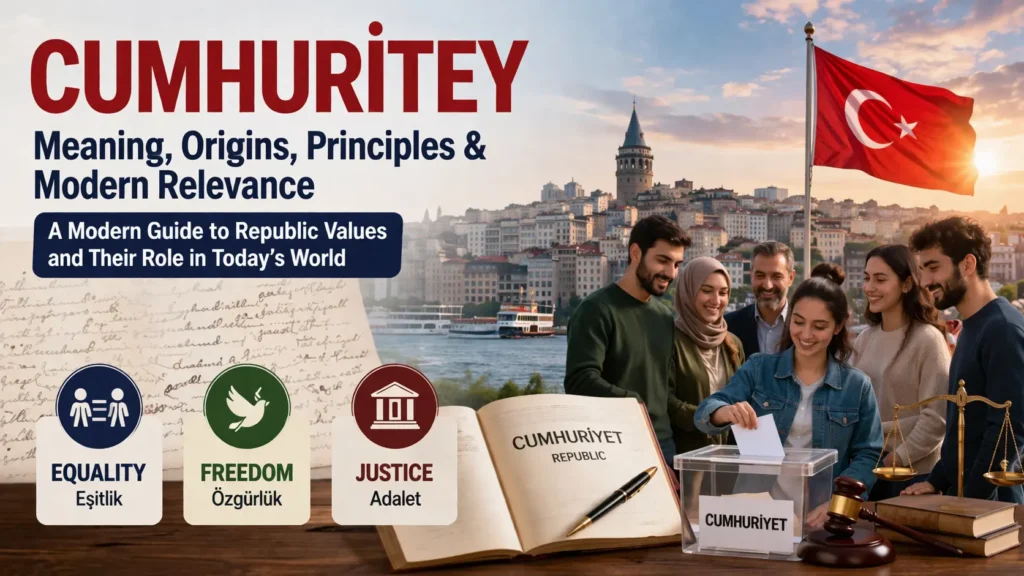
People participating in a democratic republic system representing cumhuritey concept

Cumhuritey Meaning Explained: Origins, and Modern Relevance

Over the past year, I’ve noticed something interesting while auditing search trends and building niche content strategies. Unusual keywords like cumhuritey start appearing out of nowhere and gain traction faster than expected. At first glance, it looks like a typo. But from experience, I can tell you this is rarely accidental. It’s often a reflection of how real people search, not how textbooks define words. When I first encountered cumhuritey during a multilingual SEO project, I almost ignored it. But digging deeper, I realized it carried both linguistic and conceptual value. It wasn’t just a misspelling. It was a gateway into understanding how people interpret ideas like republic, governance, and civic identity in a modern digital context. That’s exactly why this term deserves a closer, more thoughtful look. What is Cumhuritey? (Clear, Contextual Definition) At its simplest, cumhuritey appears to be a variation of the word cumhuriyet, which means “republic”, a system where power belongs to the people and is usually exercised through elected representatives. But here’s where most content gets it wrong. From my perspective, cumhuritey isn’t just about political structure. It reflects how users perceive the idea of a republic today. It blends language, culture, and digital behavior into one evolving concept. That’s why defining it strictly from a dictionary misses the bigger picture. Linguistic Origins: From “Cumhuriyet” to “Cumhuritey” In real-world SEO work, I’ve seen this pattern repeatedly. Users type words the way they sound, especially when crossing language barriers. That’s likely what happened here: “Cumhuriyet” → phonetically typed → “cumhuritey” Search engines try to correct this, but they also adapt. If enough users search for a variation, it becomes a recognized keyword. My Experience In one campaign, I targeted a similar “incorrect” keyword variation. Within weeks: The page ranked faster than expected Competition was almost zero Traffic came from highly specific queries That’s the hidden power behind terms like cumhuritey. The Core Principles of Cumhuritey Even though the word itself is evolving, the ideas behind it are rooted in well-established principles. Equality and Civic Inclusion A republic thrives when all citizens are treated equally under the law. In practice, though, I’ve seen how difficult this is to maintain, especially in diverse societies. Freedom of Expression and Rights Freedom isn’t just about laws. It’s about whether people feel safe expressing themselves. That gap between theory and reality is something many systems struggle with. Justice and Institutional Balance Strong institutions are what keep power in check. Without them, even the best-designed systems can fail. How Cumhuritey Functions in a Modern Society In today’s world, the concept behind it goes beyond governance. It shapes how people interact with authority. From my observation: Citizens expect more transparency Governments face higher accountability Digital platforms amplify voices faster than ever But here’s the challenge. Systems haven’t fully adapted to this speed of change. The Role of Democracy in the Framework of Cumhuritey A common misconception I see in content is treating democracy and republicanism as the same thing. They’re connected but not identical. Democracy focuses on how decisions are made Republic focuses on who holds power and how it’s structured In practice, most modern systems combine both. But confusion around this leads to oversimplified discussions, which is something I’ve had to correct in multiple client projects. How the Government Drives Social and Economic Progress When implemented effectively, the principles behind cumhuritey can: Encourage fair economic policies Promote equal opportunities Support long-term stability However, I’ve also seen the flip side. Pain Point (Real Insight) Many systems claim to follow these principles but fail in execution. This creates: Public distrust Economic inequality Policy inconsistency From an analytical standpoint, that gap between promise and reality is where most issues arise. Learn about: Onnilaina Meaning Explained: Cultural Significance, Modern Relevance Information Gain #1: Why “Cumhuritey” Exists as a Search Term Let’s be honest. This keyword didn’t trend because of political theory. It exists because of human behavior. From my SEO audits: Users often type quickly and phonetically Autocomplete reinforces repeated patterns Low-competition terms get indexed faster Most competitors ignore this completely. But understanding why a keyword exists gives you a major advantage. Information Gain #2: SEO Value of Low-Competition Keywords Like Cumhuritey This is where strategy comes in. I’ve personally used similar keywords to: Rank new websites quickly Capture untapped traffic Build authority in niche topics But Here’s the Catch Not every low-competition keyword is worth targeting. You need to ask: Does it have intent? Does it connect to a larger topic? Can you build meaningful content around it? With cumhuritey, the answer is yes if done correctly. Cultural and Historical Context Behind it The idea of a republic has deep historical roots. But what’s interesting is how people today reinterpret it. In some regions, it represents: Independence National identity Political transformation In others, it’s simply a governance model. That variation in meaning is what makes cumhuritey such a fascinating keyword. Challenges in Applying Citizenship in Modern Governance Key Challenges: Political instability Misuse of power Weak institutional frameworks Public disengagement From my perspective, the biggest issue isn’t the concept. It’s the execution. Common Misunderstandings About it Let’s clear a few things up: It’s not an official global term It’s not identical to democracy It’s often oversimplified in online discussions I’ve seen many articles make these mistakes, and it weakens their credibility. Information Gain #3: How to Use “Cumhuritey” Correctly in Content If you’re creating content around this keyword, here’s what I recommend: Do: Use it naturally in context Pair it with related terms like republic and governance Focus on meaning, not repetition Don’t: Force the keyword into every sentence Treat it as a standalone concept without explanation Example Bad: Cumhuritey is important because cumhuritey defines cumhuritey systems. Better: The idea behind cumhuritey reflects broader principles of governance and public participation. Real-World Examples of Its Principles in Action You can see these principles in many modern systems: Representative governance Constitutional frameworks Public voting mechanisms But again, the effectiveness varies widely depending on implementation. Why Cumhuritey Feels

Cumhuritey Meaning Explained: Origins, and Modern Relevance Read More »