
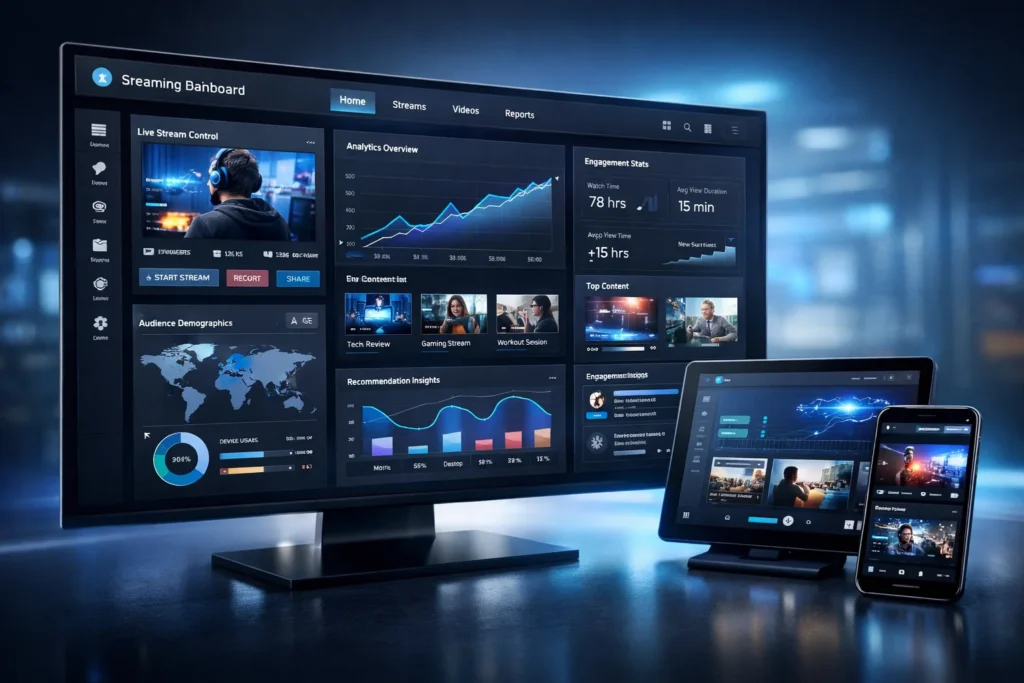
If you’ve come across the term EchostreamHub, you’re not alone in feeling a bit confused. Some sources describe it as a streaming platform, while others call it a digital ecosystem or a content hub. I’ve personally explored multiple tools in this space, and I can tell you this confusion usually happens when a platform tries to do more than one thing. EchostreamHub falls exactly into that category. It is not just about watching or hosting content. It’s about managing the entire flow of digital streaming in one place.
Here’s the thing. Most creators and businesses today are tired of switching between different tools just to run a single stream or campaign. I’ve seen people struggle with juggling platforms for hosting, engagement, and analytics, and it often leads to wasted time and poor results. EchostreamHub aims to solve that problem by bringing everything together. In this guide, I’ll break it down in simple terms so you can clearly understand what it is, how it works, and whether it’s actually useful for you.
What is EchostreamHub? (Quick Answer)
EchostreamHub is a centralized platform that allows users to stream, manage, and distribute digital content across multiple channels while also tracking performance through built-in analytics.
In plain words, it’s like a control center for your content. Instead of jumping between tools for streaming, engagement, and data, everything is handled in one place.
How EchostreamHub Actually Works
Let’s break it down simply.
You upload or connect your content. This could be a live stream, a webinar, or recorded video. Then, the system distributes it across platforms or devices. At the same time, it collects data like viewer behavior, engagement, and performance.
From my experience, the real value is in that last part. Most people underestimate analytics. But when you can see what your audience actually watches, skips, or interacts with, your strategy changes fast.
Another key point is compatibility. EchostreamHub is designed to work across devices like mobile, desktop, and smart TVs. This matters more than people think. Your audience is everywhere.
Core Features That Make EchostreamHub Different
All-in-One Streaming Dashboard
This is the feature that stands out immediately. Instead of using separate tools for streaming, hosting, and tracking, everything is inside one dashboard.
I’ve seen creators waste hours switching between platforms. This setup removes that friction.
Real-Time Engagement Tools
Live chat. Q&A. Interactive elements.
These are not just “nice to have” features anymore. They directly impact how long people stay and how connected they feel.
AI-Powered Analytics
This is where things get serious. EchostreamHub uses data to show what’s working and what isn’t.
In my work, I’ve noticed most beginners ignore analytics completely. That’s a mistake. The creators who grow fastest are the ones who pay attention to data early.
Cross-Device Streaming
Your content needs to work everywhere. Phones, laptops, TVs. If it doesn’t, you lose viewers.
EchostreamHub focuses on smooth delivery across all these channels.
Who Should Use EchostreamHub?
This is not only for one type of user.
Content creators can use it to manage streams and grow their audience.
Businesses can run webinars, product launches, or internal training sessions.
Educators can deliver structured lessons without juggling multiple tools.
I’ve personally seen small businesses struggle with running live sessions using different apps. It creates confusion, especially for the audience. A unified system solves that.
EchostreamHub vs Traditional Streaming Platforms
Here’s where people get it wrong.
EchostreamHub is not trying to replace platforms like YouTube or Twitch. It works alongside them.
Traditional platforms focus on hosting and broadcasting. EchostreamHub focuses on managing the entire process.
Think of it this way. YouTube is where your content lives. EchostreamHub is how you control and optimize it.
Benefits of Using EchostreamHub
The biggest benefit is simplicity.
Everything is in one place. That saves time.
You also get better engagement because you can interact with your audience directly.
And then there’s data. Real data. Not guesses. This helps you make smarter decisions.
From my experience, once people start using a centralized system, they rarely go back to scattered tools.
The Hidden Problem EchostreamHub Is Trying to Solve
Let’s be real. The biggest issue today is fragmentation.
Creators use Zoom for meetings, YouTube for streaming, another tool for analytics, and something else for engagement.
It’s messy.
EchostreamHub is trying to fix that by acting as a middle layer. It connects everything instead of replacing everything.
That’s a subtle but important difference.
EchostreamHub in 2026 – What’s Changing
Things are moving fast.
AI is becoming more advanced. Personalization is improving. Content is becoming more interactive.
EchostreamHub is clearly moving in that direction. More automation. Better insights. Smarter recommendations.
I also expect deeper integrations with other platforms. The future is not about isolated tools. It’s about connected systems.
Challenges and Limitations
Now let’s talk honestly.
One issue is clarity. Different websites explain EchostreamHub in different ways. That confuses users.
Another challenge is expectations. Some people think it’s a content platform like Netflix. It’s not.
Also, since it’s still evolving, not everything is standardized yet. You may still need other tools depending on your setup.
My Real Experience: Where Most Users Get Confused
I’ve noticed one common mistake again and again.
People expect EchostreamHub to provide content. Like a streaming library.
That’s not its job.
It’s a system that allows you to control and distribute your very own content material. When you remember the fact that the whole thing makes sense.
Learn about: Jernsenger Framework: Meaning, Strategy, and Uses in 2026
Pro-Tip: My Personal Take
From my experience, the biggest mistake people make is jumping into a tool like EchostreamHub without a clear content plan. They focus on features instead of strategy. The hidden trick is simple. Start with your audience first. Know what they want, then use the platform’s analytics to refine your content step by step. That’s where real growth happens.
Is EchostreamHub Safe and Legit?
Based on what I’ve seen, there’s no major red flag.
It follows standard practices like data handling and secure content delivery.
The confusion around it comes from how it’s explained online, not from safety issues.
How to Get Started with EchostreamHub
Start simple.
Create an account or access the platform.
Upload your content or connect your existing channels.
Run a test stream.
Then check your analytics. This step is critical.
Adjust based on what you learn.
FAQs
Is EchostreamHub free or paid?
It depends on how it’s offered. Some versions or integrations may be free, while advanced features could require payment.
Can I use EchostreamHub without other platforms?
Not fully. It works best when connected with other services like streaming or hosting platforms.
Is EchostreamHub available worldwide?
In most cases, yes. It is designed for global access, especially for digital content delivery.
Is EchostreamHub good for businesses?
Yes. It is especially useful for webinars, training sessions, and customer engagement.
How is it different from YouTube?
YouTube hosts content. EchostreamHub helps you manage, distribute, and analyze that content.
Conclusion
EchostreamHub is best understood as a control system for your content rather than a content platform itself. Once you shift your mindset and see it as a tool that connects, manages, and improves your streaming process, everything becomes much clearer. From my experience, the biggest advantage is not just convenience but clarity. When everything is in one place, you make better decisions and move faster.
If you are a creator, business owner, or educator, learning how to use a system like EchostreamHub can give you a real edge. It helps you focus less on technical chaos and more on delivering value to your audience. At the end of the day, tools don’t create success. But the right system, used the right way, can make the process a lot smoother.

Hi, I’m Ramiz, the founder and editor of EchoGeneral.com
A growing online platform that shares general news, trending insights, lifestyle tips, and informative articles for readers around the world.
My mission is to make knowledge simple, reliable, and accessible to everyone. Through honest reporting and white-hat SEO practices, I aim to build a trusted space where people can explore diverse topics — from technology and health to culture, productivity, and beyond.
📧 Contact: info@echogeneral.com
🌐 Visit: https://echogeneral.com